Forge the map for your next session.
Draw a grid map in your browser, then print it at true scale. Forty-five plain guides explain layout, scale and how to run the scene.
Runs in your browser. Your maps stay on your device.
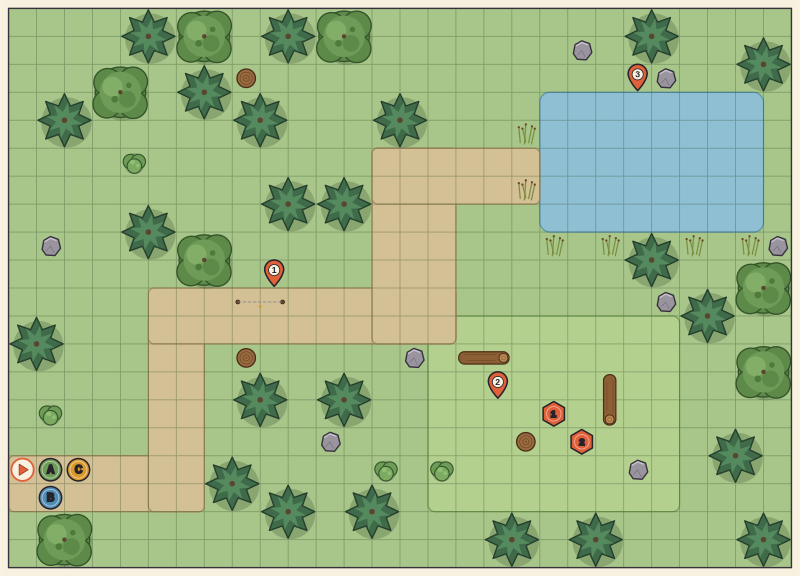
Dungeon starter, 16 by 10 squares. Every piece on it comes from the drawer.
Forty-five guides in five parts
Each part is a column of nine guides, filed by what you are drawing.
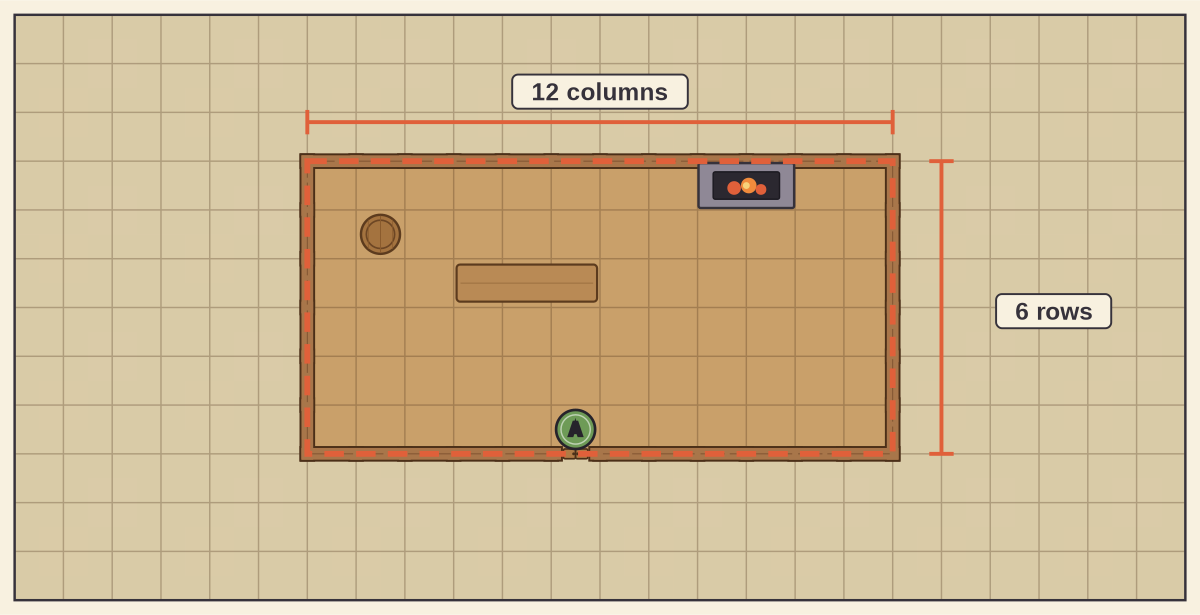 AMap fundamentals
Grid, scale, legibility and layers
9 guides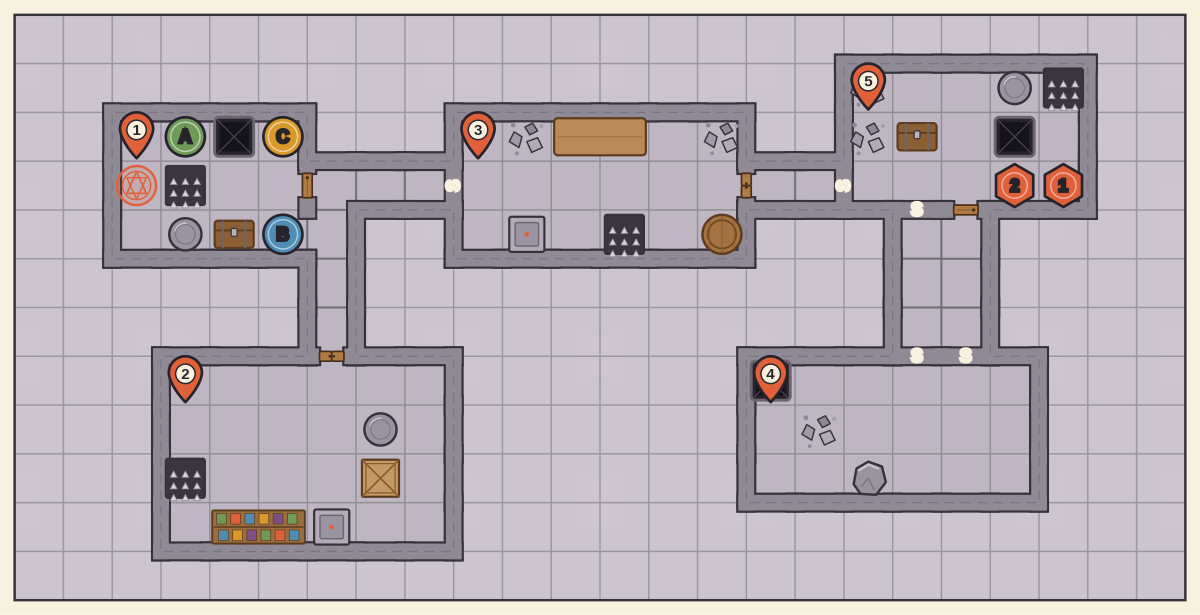 BDungeons
Room flow, doors, traps and secrets
9 guides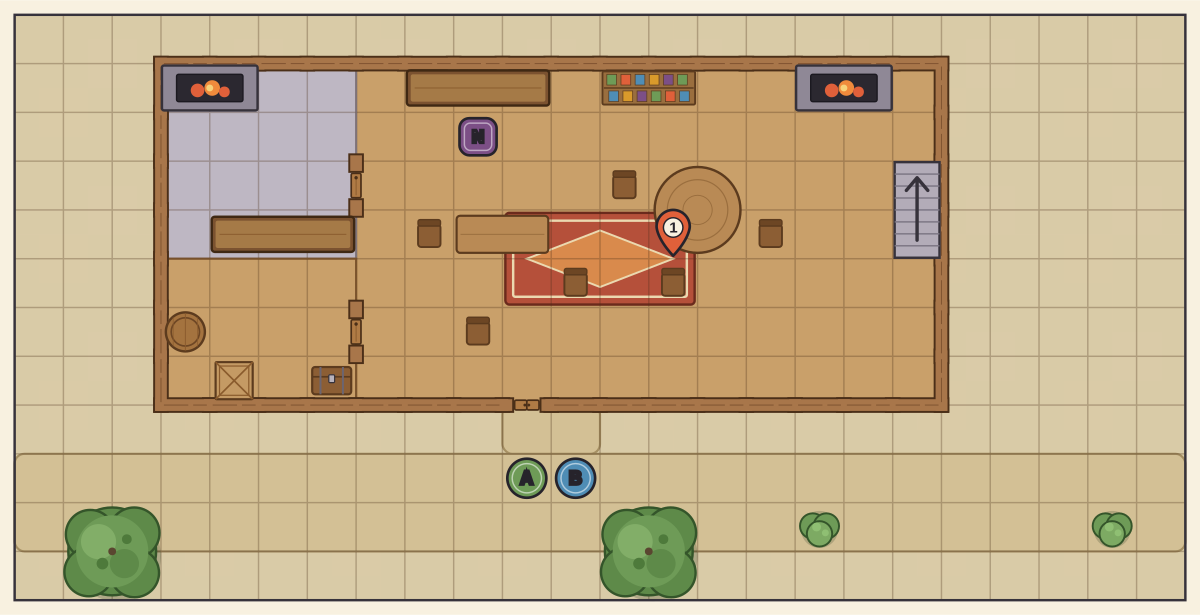 CVillages, taverns and buildings
Floor plans for places people live and work
9 guides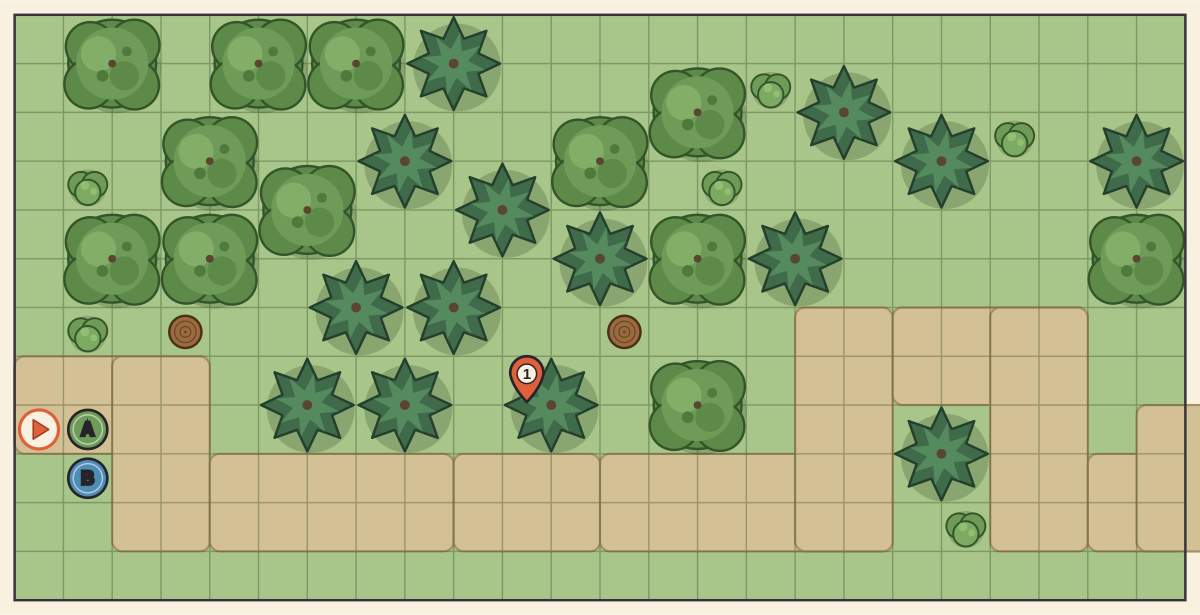 DOpen terrain
Forests, caves, rivers and trails
9 guides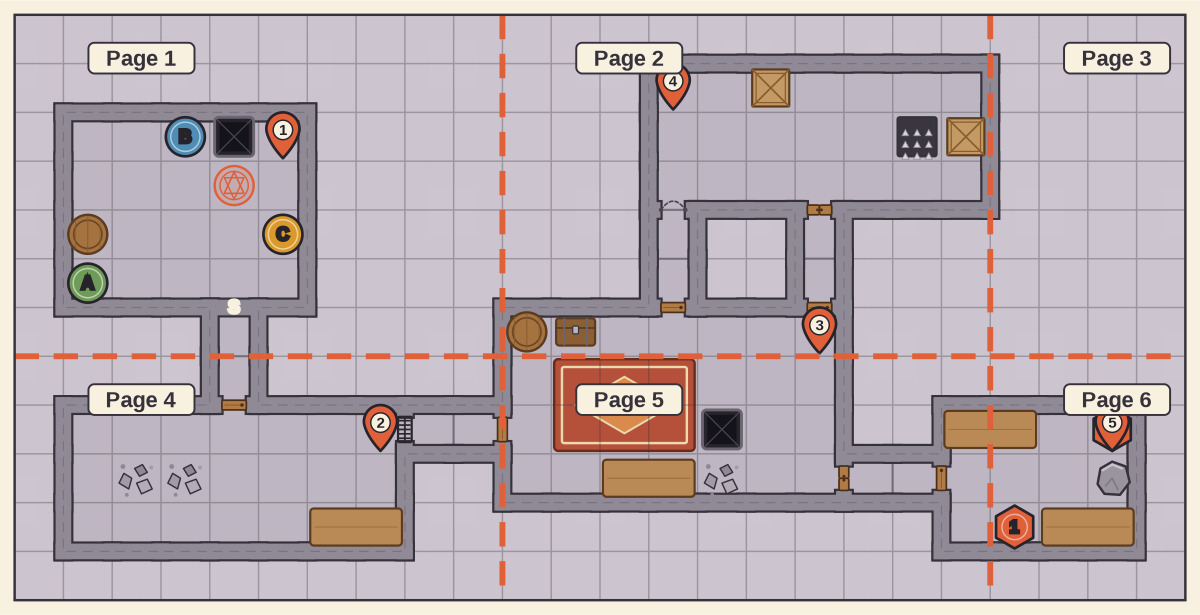 EAt the table
Printing, pieces and running the scene
9 guides- AllAll guides
Search by a word, or filter by part.
Open the index
Start with these six
One from each stage of making a map, from the first grid to the printed page.
- A1How to choose a grid size for RPG mapsPick map columns and rows from the scene, the number of figures and the table, with sheet arithmetic and starter sizes for common scenes.
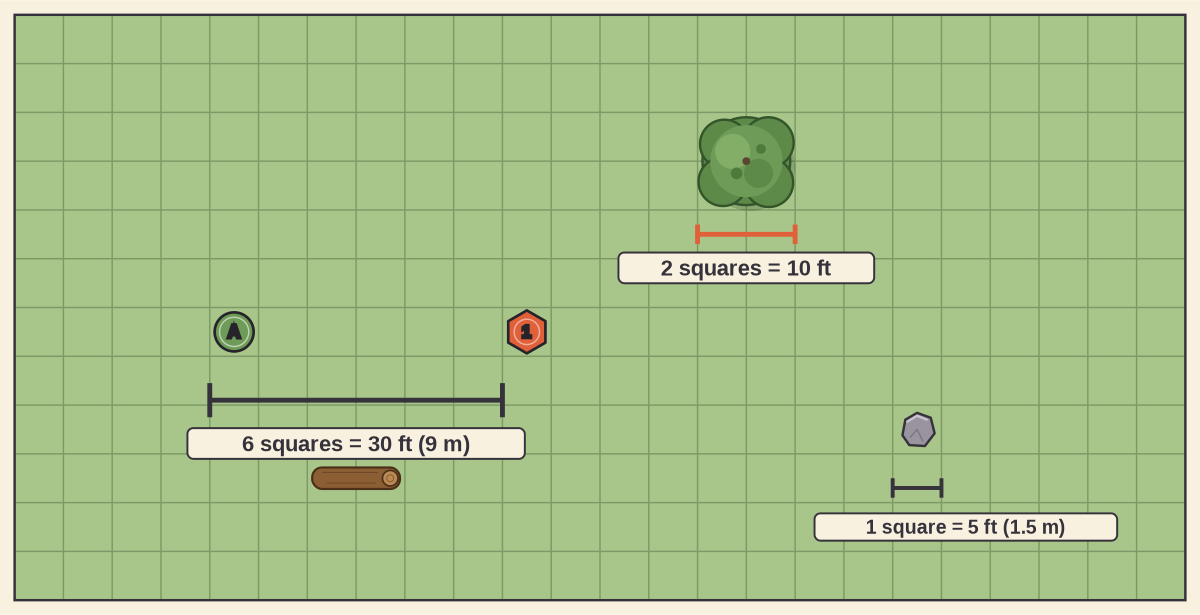 A2Scale per square for RPG mapsChoose 5 ft (1.5 m), 10 ft or 1 m per square, learn when to change scale and how to keep doors, furniture and distances consistent.
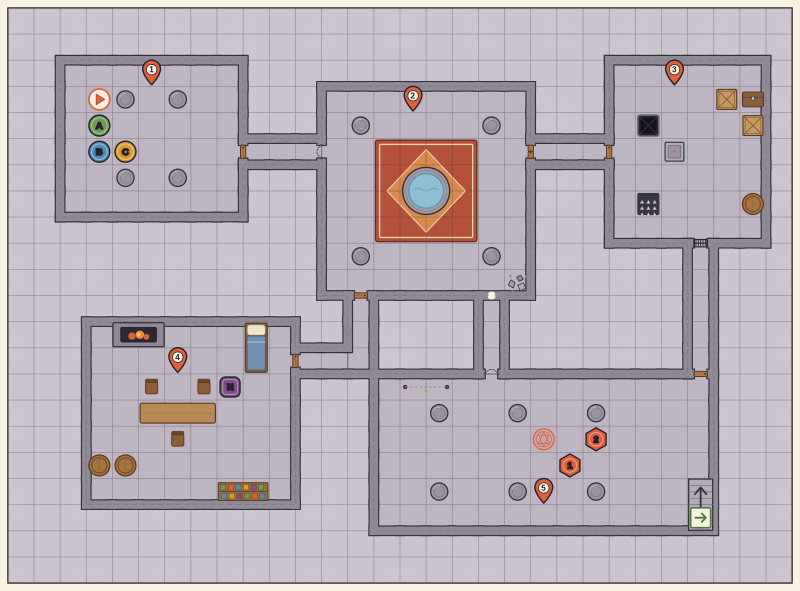
- B1Dungeon room flow: hubs, branches, sequencesPlan how dungeon rooms connect with hubs, branches and sequences, so the group always has a clear next move and the map keeps a steady pace.
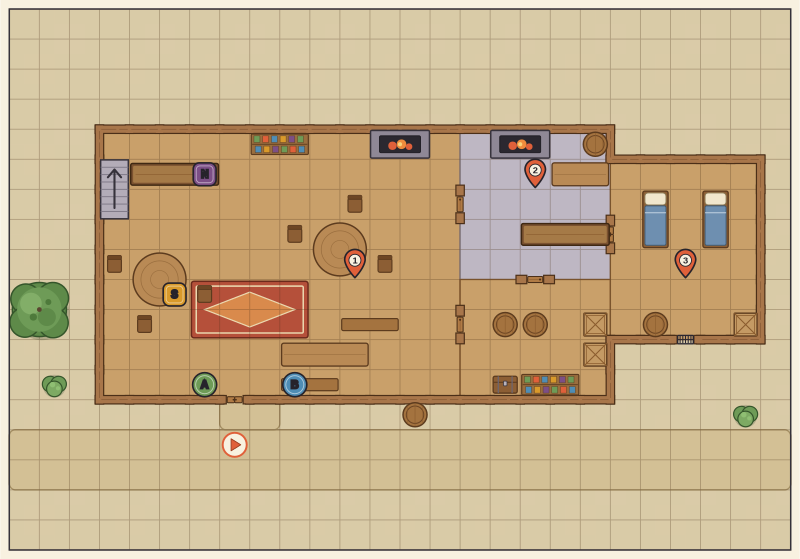
- C1Tavern floor plan: common room, kitchen, stairsPlan a tavern or inn map with a common room, hearth, kitchen, stairs and yard, sized in squares so every table has a clear sight line.
- D1Forest map design that stays playablePlan clearings, trails and tree density first, then add trunks, so your forest map leaves room to move and gives players sight lines to use.
- E1Print an RPG map at true scalePrint a battle map with squares of a fixed size, such as 1 in (25 mm): sheet capacity, scale settings, unprinted borders and a ruler check before the full run.
Open a starter map and change it
Every starter is built from the same pieces you get in the drawer, so nothing is locked.
How the guides are made
Written for this site
Every guide has its own angle and its own text. Nothing is copied from another site.
Sources on every page
Each guide ends with the books and standards it draws on, with a note on what to read them for.
Corrections are logged
If a guide is wrong, we fix it and record the change on a public page.