A
Map fundamentals
A map works at the table when three things are settled early: how big the grid is, what one square means and whether the drawing can be read from across the table.
These nine guides cover those decisions and the habits that keep a map tidy as it grows: layers, a small set of symbols, a controlled palette and clear rules for counting distance.
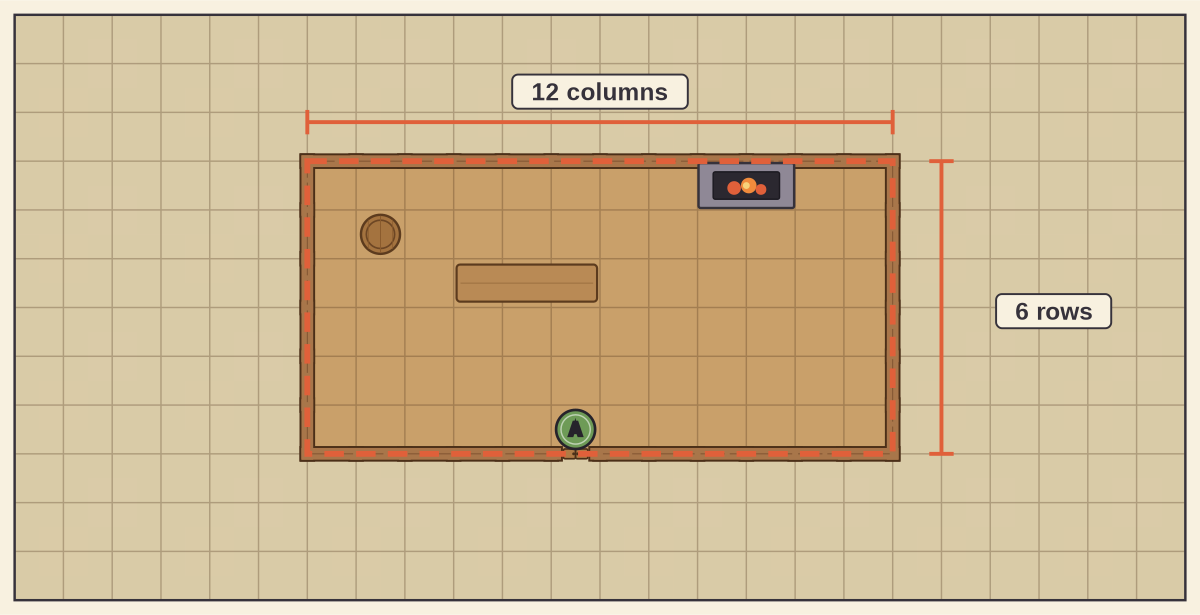 A1How to choose a grid size for RPG mapsPick map columns and rows from the scene, the number of figures and the table, with sheet arithmetic and starter sizes for common scenes.
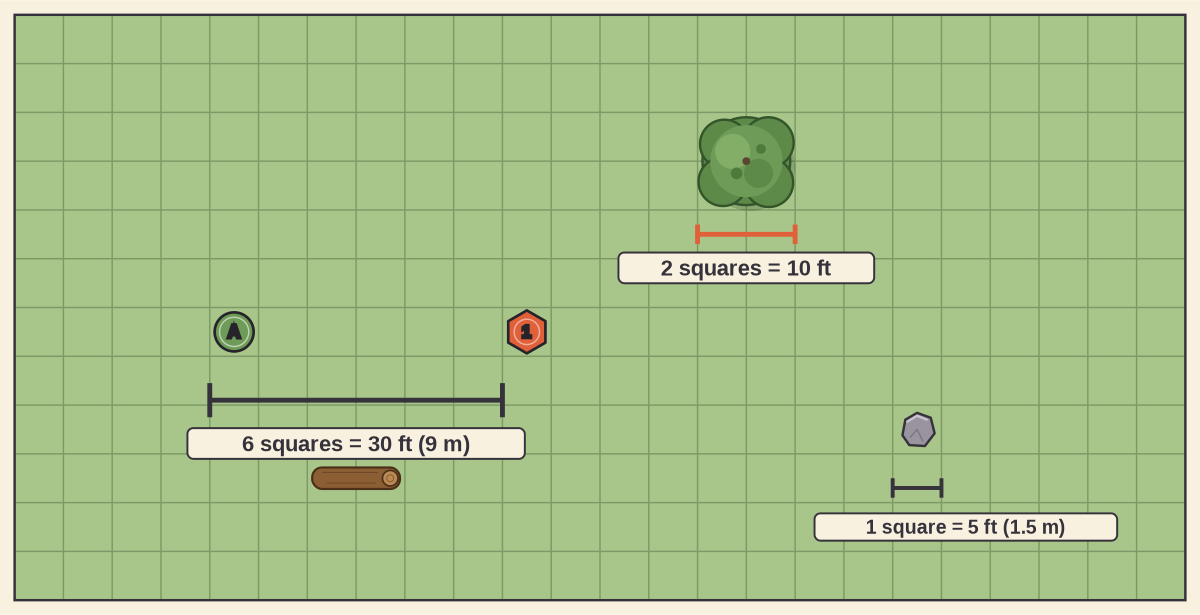 A2Scale per square for RPG mapsChoose 5 ft (1.5 m), 10 ft or 1 m per square, learn when to change scale and how to keep doors, furniture and distances consistent.
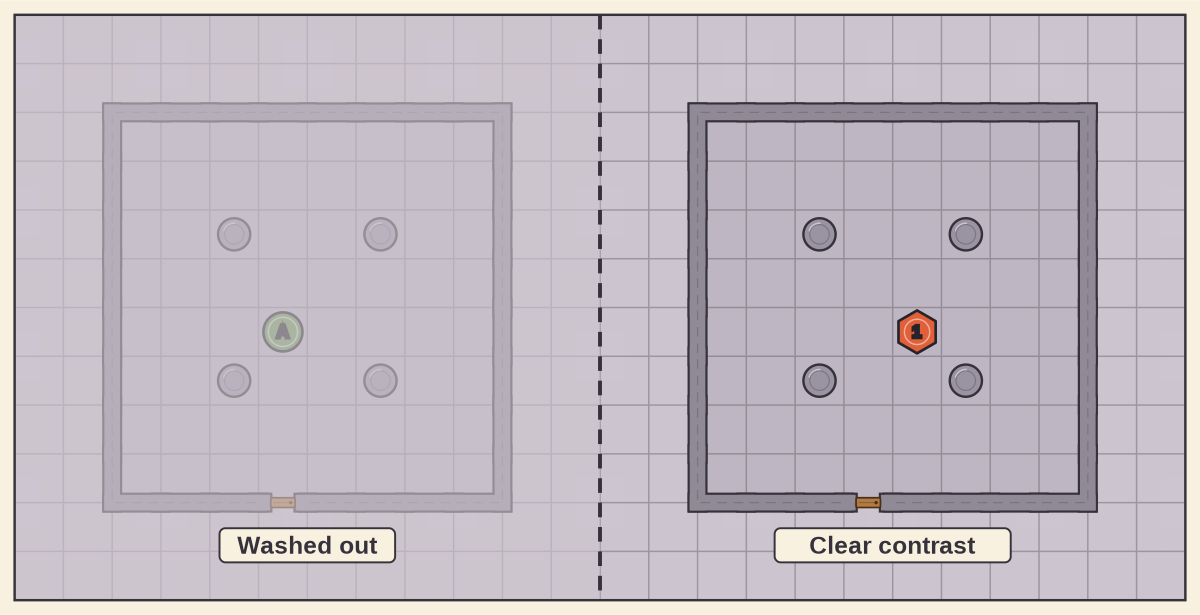 A3Making RPG maps readable across the tableLine weight, contrast, symbol size and label size for battle maps that players can read at arm's length and beyond, in print and on screen.
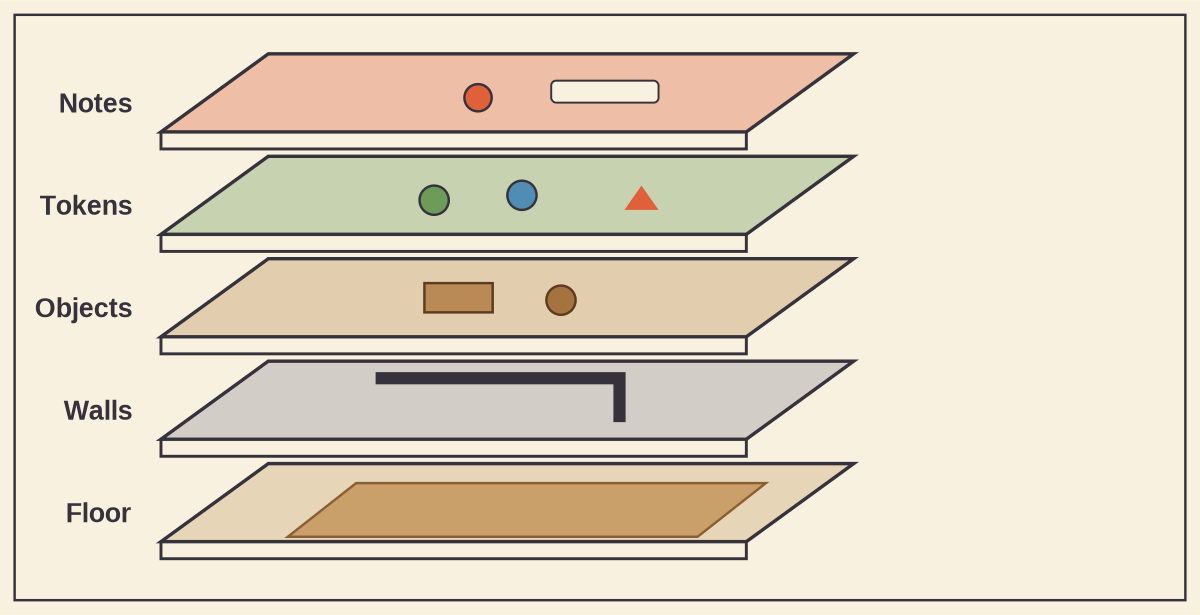 A4Planning an RPG map in layersSplit a map into floor, walls, objects, tokens and notes so edits stay easy, nothing hides behind something else and the table copy stays clean.
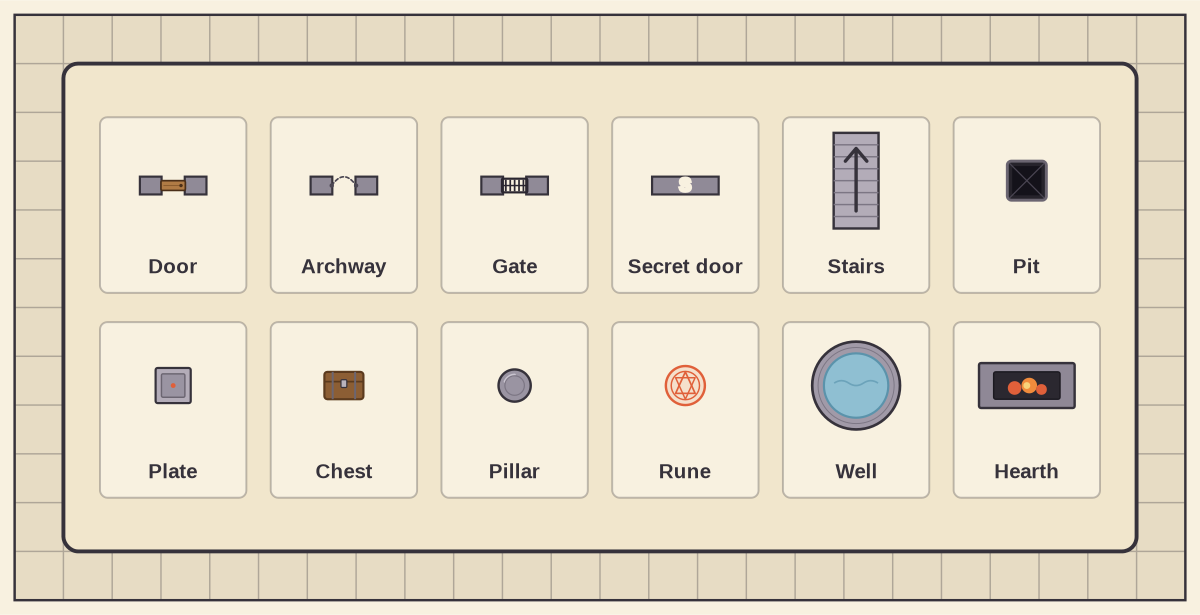 A5Map symbols and legends for RPG mapsBuild a small, consistent symbol set and a short legend so players can read doors, stairs and hazards on your map without asking what they mean.
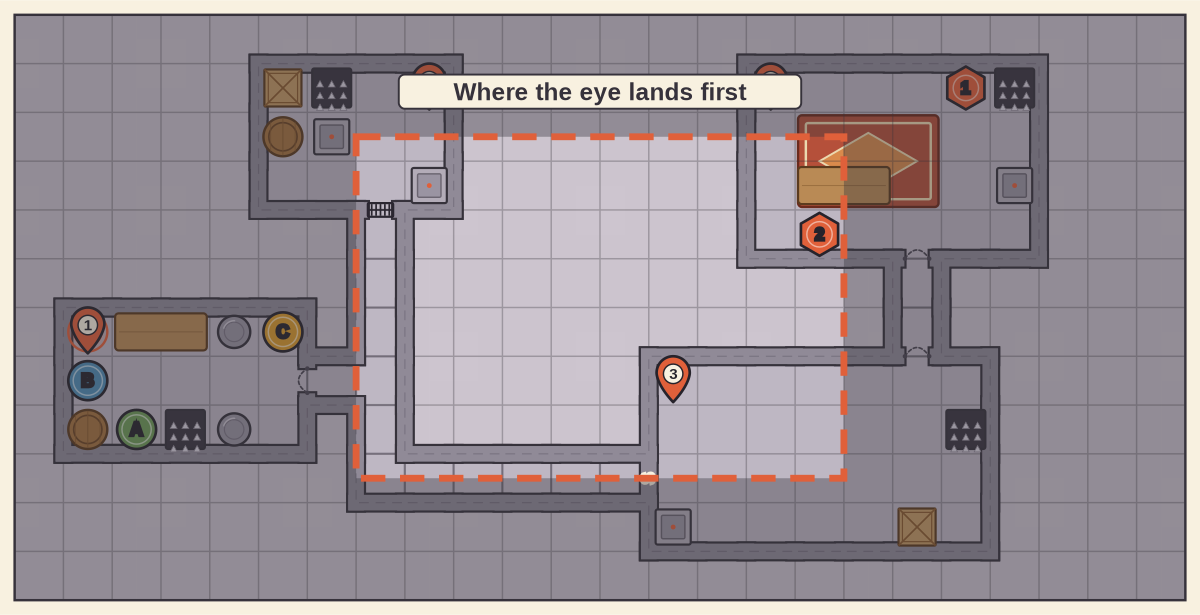 A6Focal points on RPG mapsUse one main focal point, a few secondary ones and deliberate empty space so players see what matters in a scene before they read a single label.
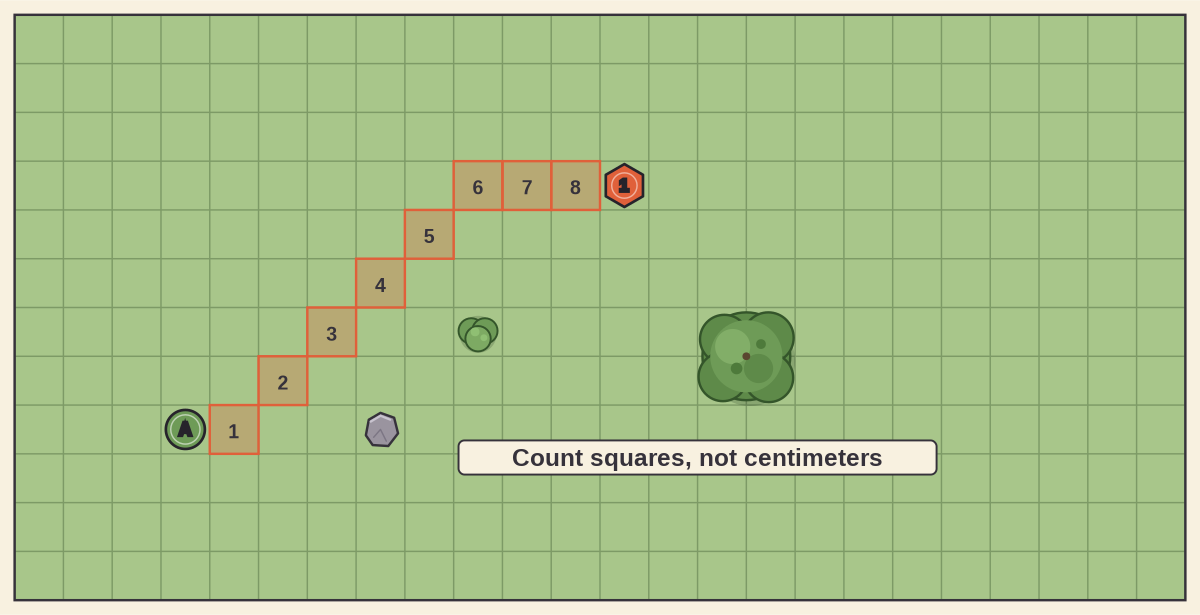 A7Measuring distance on a square grid mapCount movement, diagonals, ranges and lines of sight on a square grid with simple, agreed rules so the table never stops for an argument.
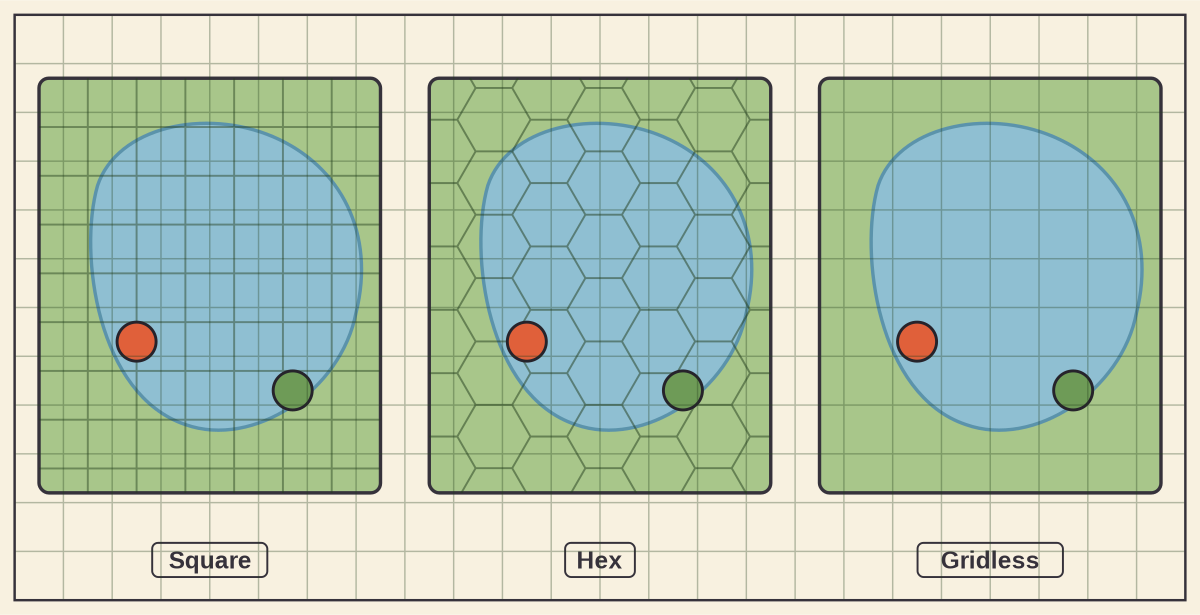 A8Square, hex or gridless RPG mapsCompare square grids, hex grids and gridless maps by distance counting, drawing effort and printing, then pick the right one for each scene.
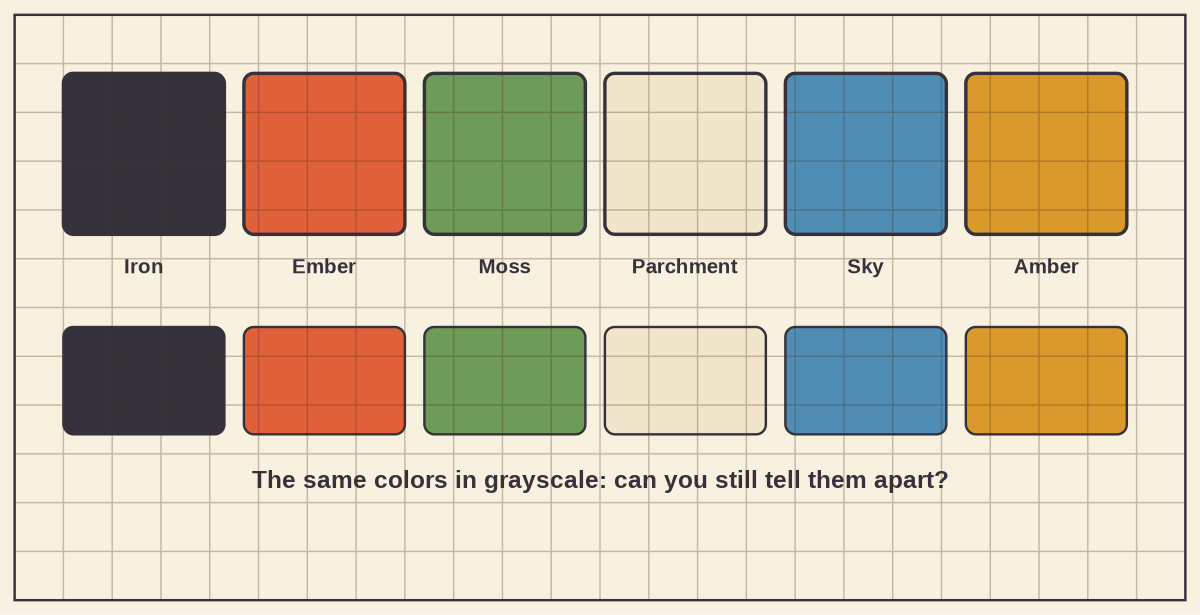 A9Color palettes for RPG mapsChoose a small palette by lightness first, test it in grayscale and keep it readable on paper and for people with color vision differences.